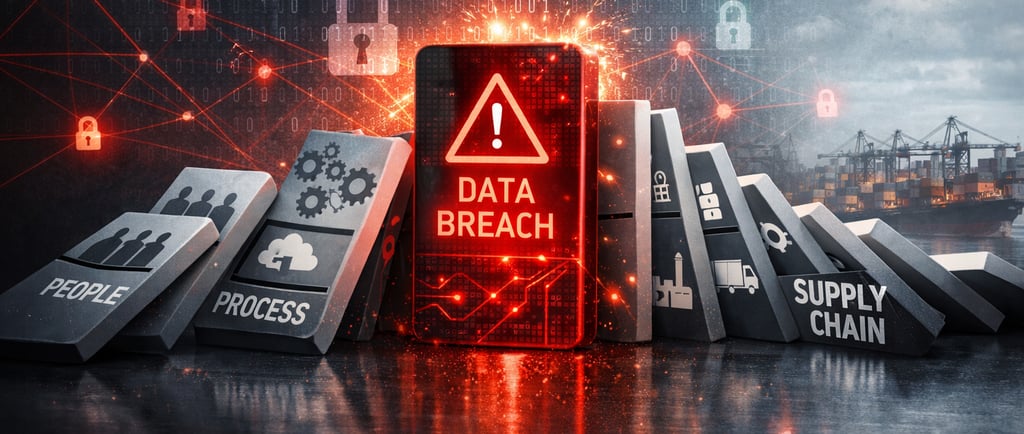
In today’s cybersecurity landscape, an organization’s defense isn’t just shaped by its internal systems — it’s also defined by the security practices of every third-party vendor it works with. This concept is increasingly important as companies outsource more services, rely on cloud platforms, and integrate tools from external suppliers. While internal infrastructure might be hardened with firewalls, encryption, and robust threat detection, those protections can be undermined if a vendor’s systems are weak or poorly secured.
The phrase “your security is only as strong as your weakest vendor” encapsulates a critical truth in risk management: attackers often look for the easiest point of entry. If a vendor with privileged access to systems, data, or authentication tokens isn’t maintaining strong cybersecurity controls, it can become a gateway for breaches. Real-world breaches — such as the massive Target data compromise in 2013, which originated through a third-party HVAC vendor — show how attackers pivot from weak external links to core networks.
Vendor risk goes beyond simple firewall and antivirus configurations. It includes areas like access control, patching cadence, data encryption, and employee security training. Many organizations underestimate the complexity involved in evaluating vendor security, treating it as a checkbox process during onboarding rather than an ongoing, dynamic risk evaluation. Security professionals increasingly advocate for continuous monitoring, security questionnaires, penetration testing, and contractual requirements that hold vendors accountable to evolving threat standards.
This holistic view of security also aligns with what cybersecurity frameworks and standard practices recommend: assessing not only internal defenses, but also the strength of interconnected systems. Emerging regulations and industry expectations emphasize that companies are responsible for the data and access they give to third parties — meaning negligence at the vendor level can also expose the primary organization to legal and compliance consequences.
Interestingly, the rise of AI-driven tools and automated monitoring systems means organizations can now better assess and track vendor security posture across time, without relying solely on annual reviews. These technologies can scan for misconfigurations, suspicious traffic patterns, and even new vulnerabilities as they are disclosed.
Ultimately, the message is clear: strong internal cybersecurity means little if it’s tethered to weak external partners. A comprehensive risk strategy must extend beyond the corporate perimeter to ensure every link in the chain is secure — because attackers will always seek the path of least resistance.